Rebuilding the Village Around Birth
perinatal support program
An 80-week community-based perinatal support intervention designed to address the conditions surrounding Black women and families before, during, and after pregnancy.
The problem
A persistent and preventable disparity
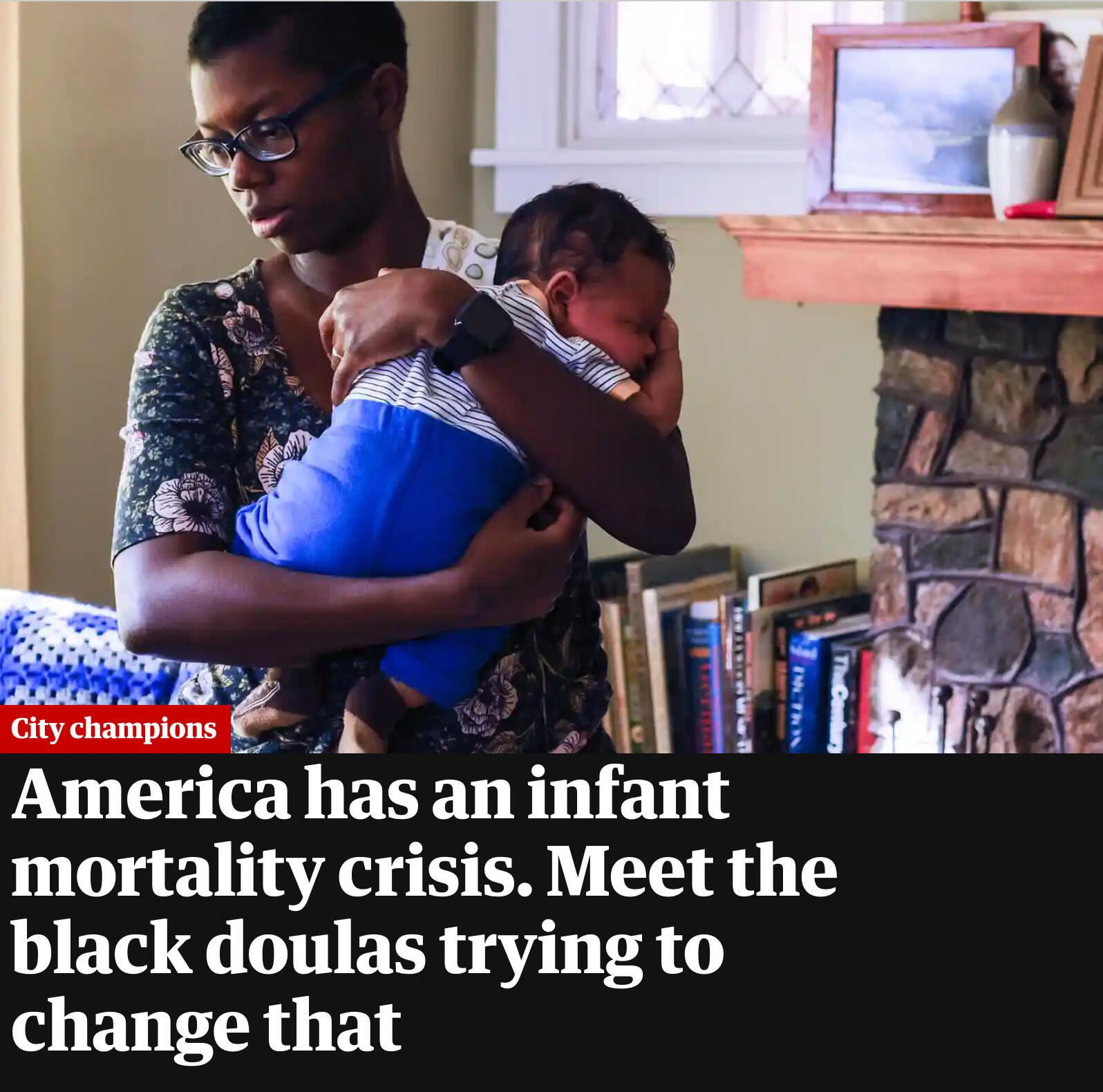
In 2013, Ohio ranked 45th among the 50 states for infant mortality, with an overall rate of 7.33 infant deaths per 1,000 live births. But the statewide numbers obscured an even more troubling disparity: Black infants were dying at nearly twice the overall state rate.Ohio's Black infant mortality rate was 13.8 deaths per 1,000 live births in 2013, increasing to 14.3 in 2014.The disparity was reflected locally.In 2013, Cuyahoga County recorded an overall infant mortality rate of 8.9 deaths per 1,000 live births, compared with Ohio's rate of approximately 7.4 and a national rate of approximately 6.0. Cleveland's citywide infant mortality rate was 12.9 for the 2012–2015 period.For Black infants in Cuyahoga County, the numbers were even more alarming: 14.7 deaths per 1,000 live births in 2013 and 14.4 in 2014.These figures revealed a persistent and deeply troubling disparity in birth outcomes. Black infants were experiencing substantially higher mortality rates, both statewide and within the Cleveland community.This was the public health challenge confronting the community in 2013–2014: How do we change the conditions contributing to the disproportionate loss of Black infant lives?It was against this backdrop that the Cleveland Foundation began exploring opportunities to address infant mortality and lead poisoning in Cleveland. I was invited to present an idea for addressing Black infant mortality.That invitation would become the starting point for an intervention designed to do more than respond to the immediate problem.
THE INQUIRY
Where was the village?
Where was the sisterhood?
The numbers established the urgency of the problem. But changing the numbers would require looking beyond the numbers themselves.I began examining the support surrounding Black women throughout the perinatal experience. What became apparent was that while programs existed to address various aspects of maternal and infant health, there was a critical dimension missing from the response: the social and relational infrastructure surrounding women.Where was the village? Where was the sisterhood?Women needed more than referrals, appointments, and periodic home visits. They needed community. They needed relationships with other women, opportunities to share experiences, and people who could walk alongside them through pregnancy, childbirth, and postpartum.The gaps I identified included:
Community and connection: Insufficient opportunities for women to build relationships, establish supportive networks, and experience a sense of belonging.
Continuous support: A lack of sustained, connected support throughout the perinatal experience, rather than services delivered in isolated stages.
Birth support: Limited access to doulas and other forms of dedicated support during pregnancy, labor, delivery, and postpartum.
Whole-person support: A fragmented approach to the broader circumstances affecting women's lives, including housing, education, employment, mental health, economic opportunity, and access to legal resources.
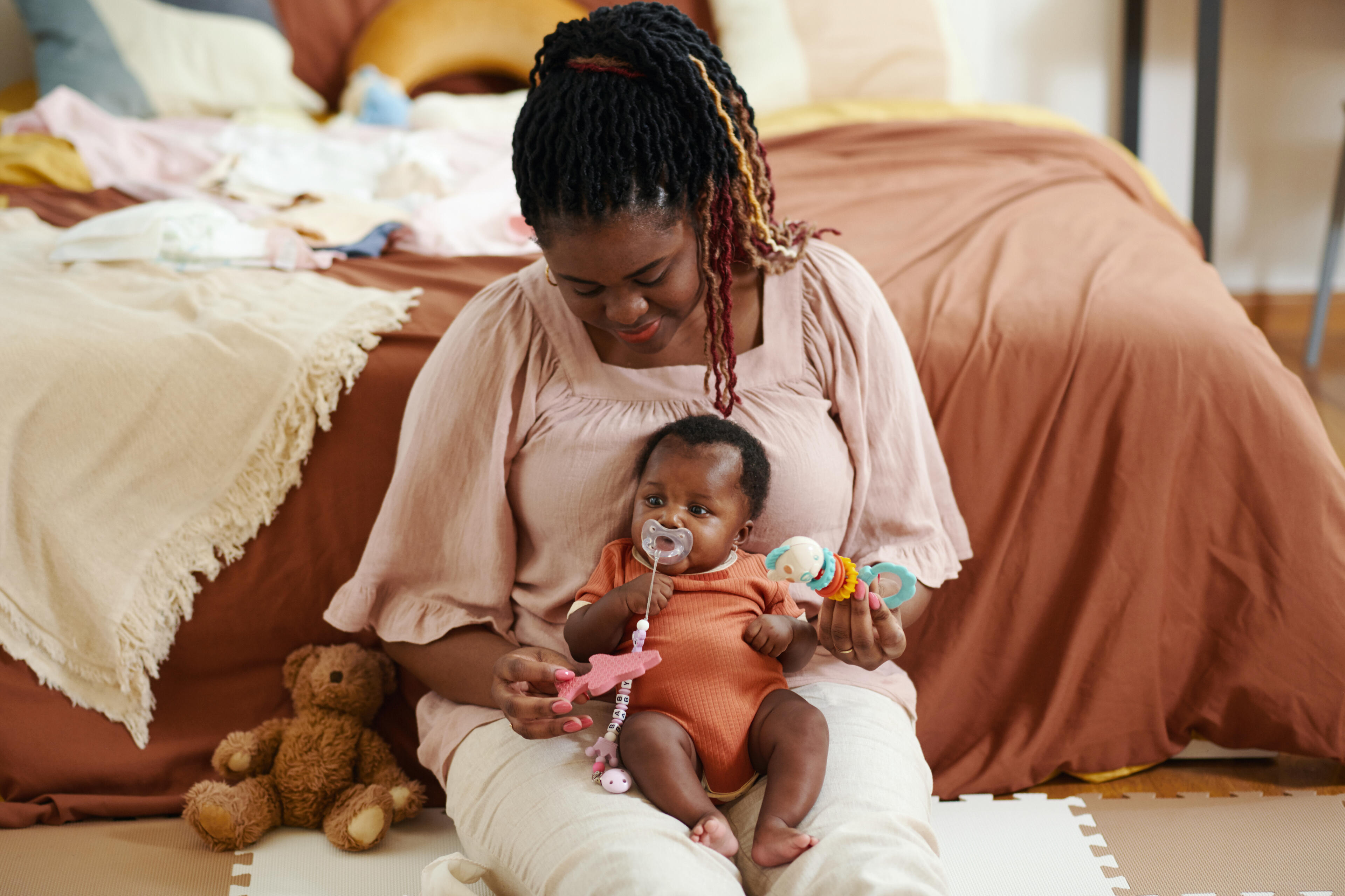
Home-visiting programs and other maternal health initiatives were already operating in the community. But providing services to an individual woman was not the same as building a community of support around her.I saw an opportunity to approach the problem differently.Rather than simply adding another service to an existing collection of programs, what if we designed an interconnected system of support that could surround women throughout their perinatal journey?What would it take to rebuild the village around birth?That became the central question guiding the intervention design.
THE INTERVENTION
The Perinatal support pipeline
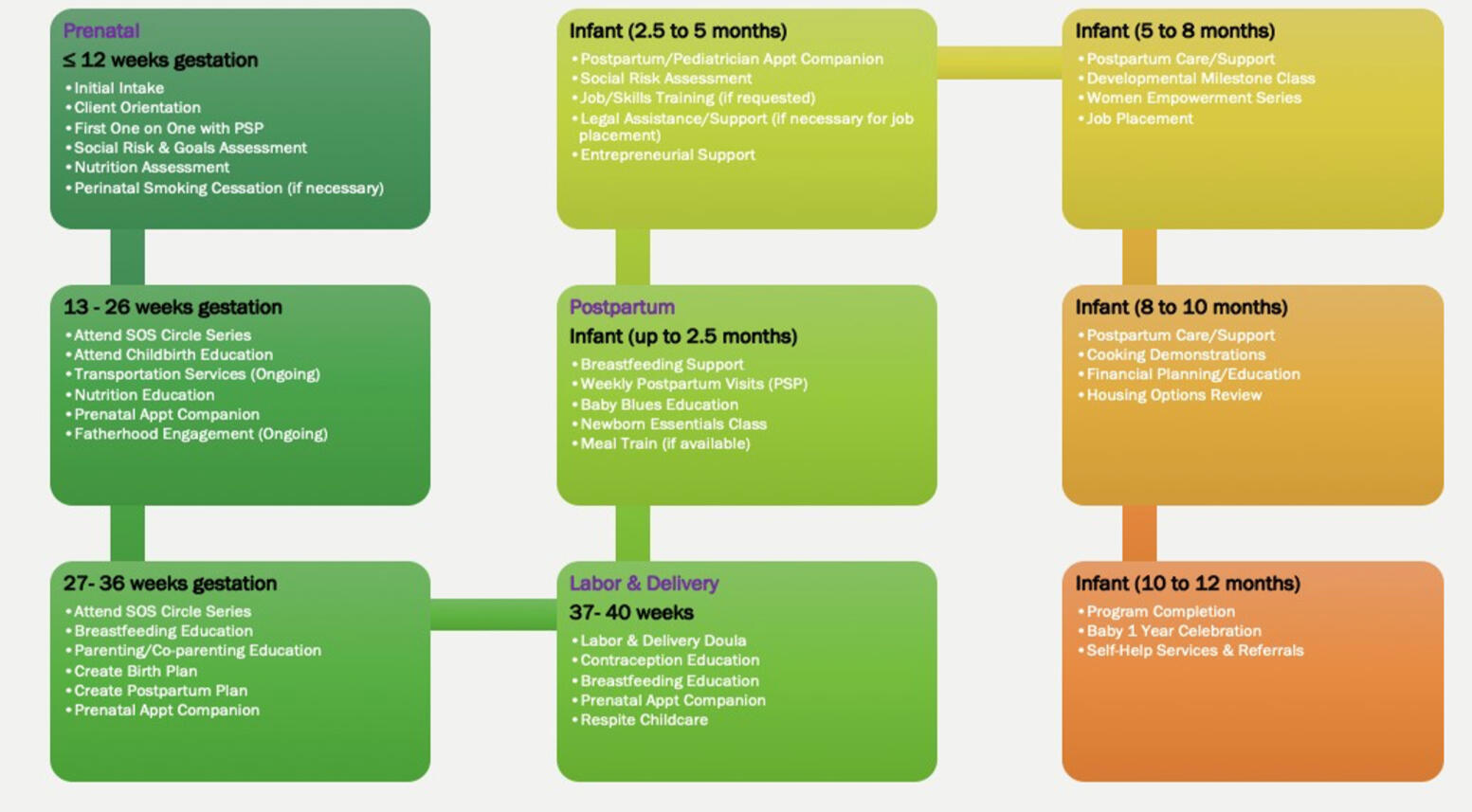
I designed an 80-week Perinatal Support Pipeline: a comprehensive, community-based model that connected women to education, relationships, birth support, and resources across the perinatal experience.Rather than treating pregnancy, childbirth, and postpartum as separate events, the pipeline approached them as interconnected stages in a woman's life journey.The model created opportunities for sustained engagement through two to three classes and activities each week, combining childbirth education, sister circles, birth support, postpartum support, and access to resources.But the intervention extended beyond the delivery of services.I also designed a broader framework for addressing the conditions surrounding women's lives.
SUPPORT MODEL
The Holistic Birth Equity Model
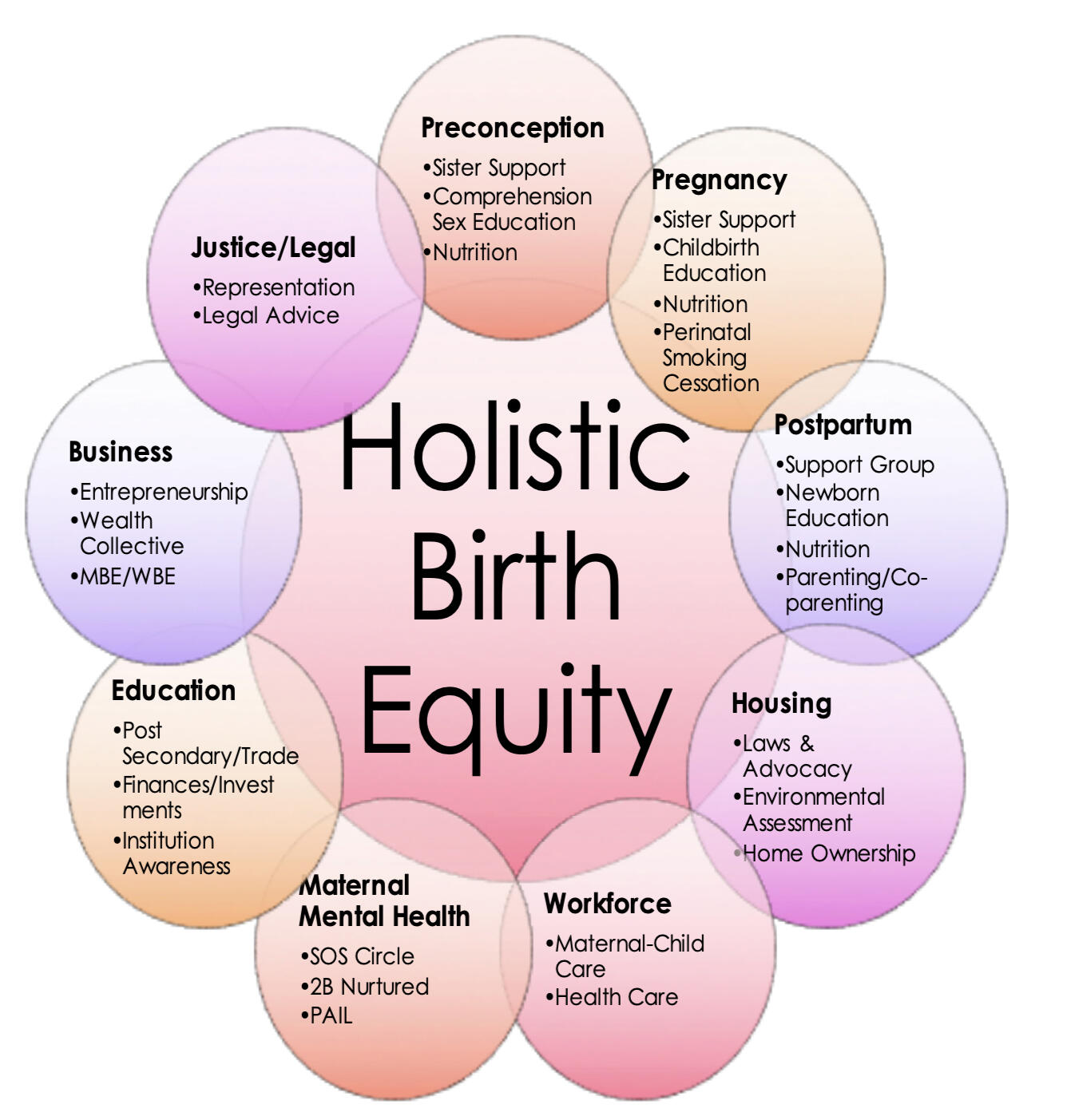
A central component of the intervention was the development of the Holistic Birth Equity Model, which connected three stages of the perinatal experience—preconception, pregnancy, and postpartum—to six areas of support: housing, workforce, maternal mental health, education, business, and justice/legal services.The model recognized that birth equity extends beyond clinical care. It addressed the broader conditions affecting women's lives and created a framework for connecting women to resources and opportunities that could support their well-being and that of their families.By bringing these six areas together, the model offered a more integrated approach to birth equity—one that considered not only the experience of pregnancy and birth, but the circumstances and opportunities shaping women's lives before and beyond it.
WORKFORCE DEVELOPMENT
Building a community-based workforce
A central component of the intervention was the development of the Perinatal Support Person (PSP).I envisioned a trained community-based support person whose role extended beyond traditional doula services. In addition to birth support, PSPs would help women access resources, navigate systems, build connections, and receive ongoing support throughout their perinatal journey.The intention was to build a workforce capable of supporting both the birth experience and the broader needs of women and families.The intervention wasn't simply to provide more services. It was to build the infrastructure of a village.Because at the end of the day, we realized that Iit really took a village.
IMPLEMENTATION
From idea to operating model
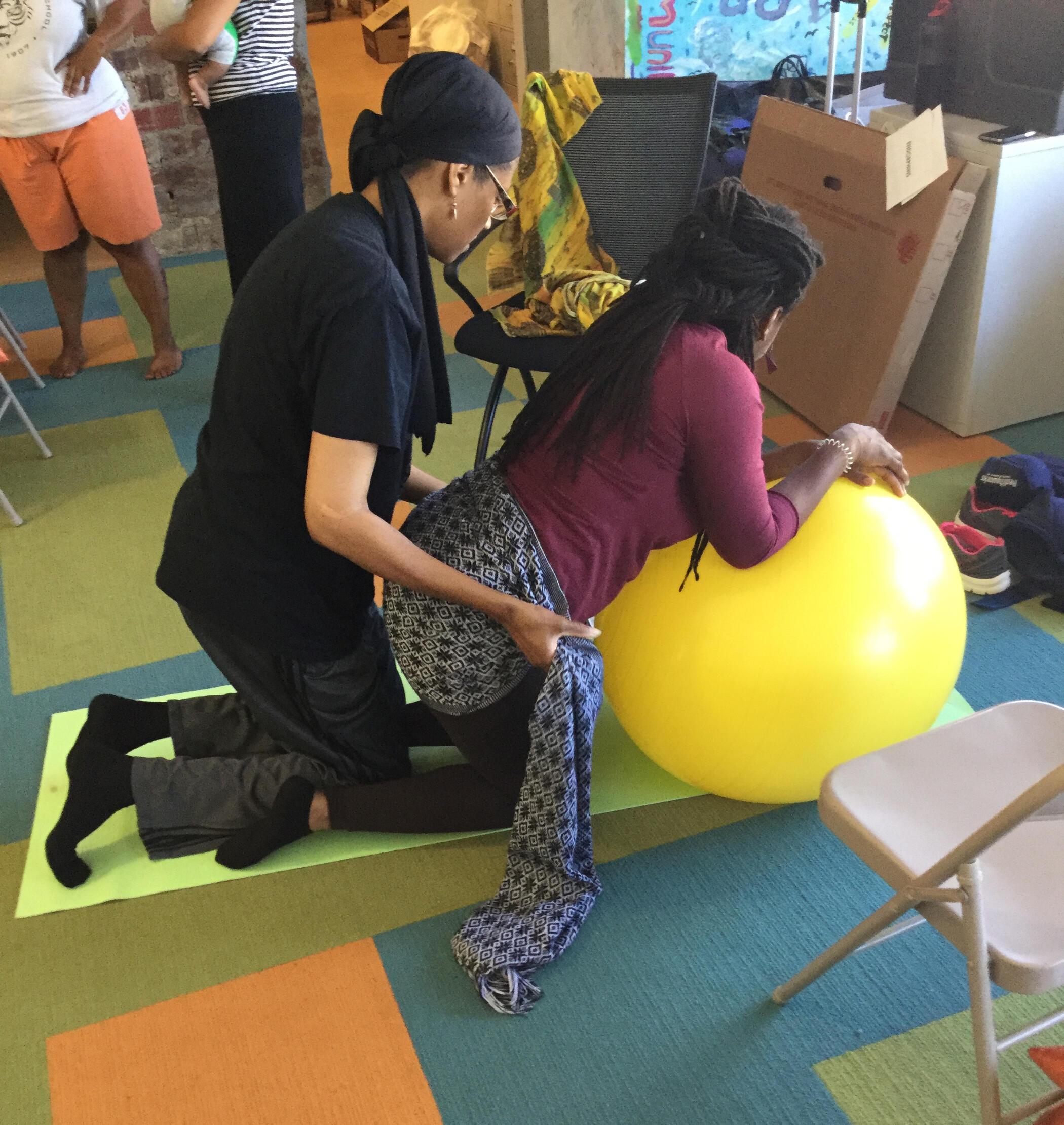
The first investment was a $4,300 grant to conduct four community events focused on pregnant women and birth. Building on that initial work, the Cleveland Foundation awarded $125,000 to pilot the Perinatal Support Program.In 2015, I established Birthing Beautiful Communities as the organizational vehicle for implementing the intervention.Launching the programI partnered with Neighborhood Connections to secure training space and brought trainers from Mamatoto Village in Washington, D.C., to prepare an initial cohort of approximately ten women as Perinatal Support Persons.Operationalizing the pipelineThe program was structured around two to three classes and activities each week, incorporating childbirth education, sister circles, and ongoing perinatal support.Practical supports were also built into program delivery. Transportation assistance through Uber helped women get to classes, medical appointments, and other essential destinations. Food and childcare were provided during program activities to make participation more accessible.Through these partnerships, resources, training, and operating structures, the Perinatal Support Pipeline moved from an intervention design into an active community-based program.
RESULTS
What happened when the village was rebuilt?
The Perinatal Support Program produced measurable birth outcomes, documented participant experiences, and generated opportunities for further research into the experiences of Black women during pregnancy.
An independent external evaluation examined 119 births among program participants between January 2017 and June 2018.
Improved birth outcomes
Of the 119 infants born during the evaluation period, 118 survived, representing an infant survival rate of 99.2%.The evaluation also found that rates of prematurity, low birthweight, and cesarean delivery among program participants were lower than comparison rates for Black women locally, statewide, and nationally. Breastfeeding rates were higher than the comparison rates.These findings provided an independent assessment of outcomes during the evaluation period and offered an important measure of the program's early impact.
The experience of the village
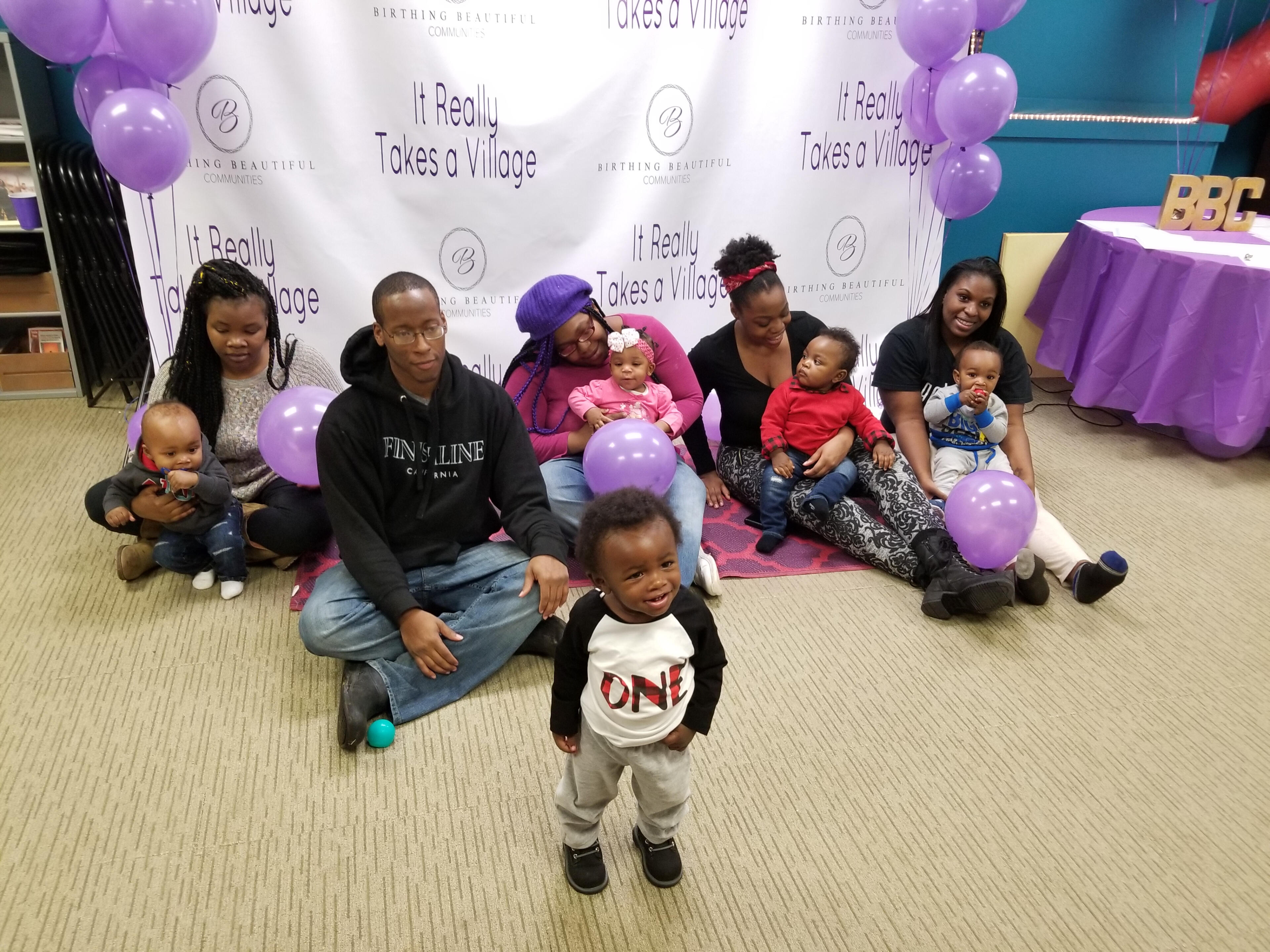
The evaluation also examined the experiences of women participating in the program.Women described feeling comfortable, connected, empowered, supported, and safe. The program created opportunities to build relationships, share experiences, develop knowledge, and experience a sense of community.These findings were significant because the intervention was designed to address more than access to services. It was designed to create an environment in which women could experience sustained support, connection, and belonging throughout their perinatal journey.
LEGACY
Reimagining what birth equity requires
The Perinatal Support Program began with a question about why Black babies were dying. It evolved into a broader approach to addressing the conditions surrounding Black women's lives and the support structures necessary for women and families to thrive.The work introduced a community-based perinatal support model, developed a trained workforce of Perinatal Support Persons, and connected birth equity to six areas of women's lives through the Holistic Birth Equity Model.But its contributions extended beyond program implementation. The experiences of participating women became the subject of academic research, while separate investigations into stress among Black pregnant women opened new questions about the relationship between socioeconomic conditions, lived experiences, and birth outcomes.The work also reinforced a central premise that continues to inform my approach to intervention design: outcomes do not exist independently of the conditions that produce them.If we want different outcomes, we have to examine and change the conditions producing them.The village was not simply a metaphor. It was an intervention design challenge.And the Perinatal Support Pipeline was one expression of what becomes possible when we approach that challenge through intentional design.
RESEARCH & PUBLICATIONS
Contributing to the body of knowledge on birth equity
The Perinatal Support Program generated questions and insights that extended beyond program implementation. The experiences of participating women became the subject of academic research, resulting in at least four peer-reviewed journal articles to which I contributed as an author.These publications examine the experiences of Black women receiving perinatal support and contribute to a broader understanding of community-based approaches to maternal health, birth equity, and the role of support throughout the perinatal experience.This research represents another dimension of the work: not only designing and implementing an intervention, but documenting its experiences, examining its implications, and contributing to the knowledge that can inform future approaches to improving birth outcomes.
Social Work in Healthcare
Supporting African American women through their pregnancies and beyond
American Journal of Orthopsychiatry
Experiences of Black Women During Pregnancy: The Meaning of Perinatal Support
Ethnicity and Health
Black women’s experiences with professional accompaniment at prenatal appointments
Journal of Advanced Nursing
Black women’s childbirth experiences with medical providers when accompanied by perinatal support professionals

MEET THE DESIGNER
The mind behind the intervention.
I’m Christin, an Interventions Designer who investigates the conditions producing the outcomes we experience and designs interventions to change them.The Perinatal Support Program reflects my approach: look beyond the presenting problem, question what existing approaches may be missing, and imagine what becomes possible when we design around the conditions shaping people's lives.This work is one expression of a larger body of work centered on identity, human experience, and the design of meaningful change.I design for change.